PAUL Heat Recovery Filters: A comprehensive guide on how to choose, change and purchase PAUL heat recovery filters
PAUL filters for heat recovery units are an important part of modern ventilation systems, ensuring clean and healthy air in homes or commercial premises. These specialized filters play a crucial role in removing dust, pollen and other contaminants from the intake air, while maintaining the efficiency of the heat recovery system.

PAUL recuperator filters comply with the ISO 16890 standard, which defines the quality and efficiency of air filters based on their ability to retain particles of various sizes. This standard is an important indicator when selecting the right filters to ensure optimal air quality levels and system efficiency.
In this comprehensive guide, you will learn about the types of PAUL recuperator filters, their standards, how to choose the right filters for your model, optimal replacement times and best maintenance practices. We will also explore where to buy original PAUL filters and why it is important to choose the right products.
Understanding PAUL heat recovery filters: types, standards and benefits
PAUL heat recovery systems are characterized by high efficiency and advanced technologies. The filters of these systems are an equally important part, ensuring both air quality and equipment durability.
How to choose the right PAUL filter for your model
To choose the right filters for your PAUL heat exchanger, you first need to identify the exact model and filter specifications. PAUL manufactures various heat exchanger models, such as Focus F200, Climos F200, which require different filter types and sizes.

When choosing filters, it is important to pay attention to the following criteria:
- filter size – must exactly match your heat exchanger model
- filter class – G4 (or ISO coarse) filters are designed for large particles, and F7 (or ISO ePM1) – for finer particles and allergens
- compatibility with a specific heat exchanger model – for example, PAUL Focus F200 requires special filters measuring 275x187x20 mm
For most PAUL heat exchangers, it is recommended to use a combination of two filters: a G4 class filter for the supply air inlet and an F7 class filter for the extract air inlet. This ensures optimal system performance and the highest air quality.
When looking for the right filters for your PAUL system, you can visit the specialized /lt/ 20-paul">PAUL filtrų asortimente , where you will find various models, including the popular PAUL FOCUS (F) 200 filter sets.
PAUL filters are designed in accordance with the ISO 16890 standard, which replaced the previous EN779 standard. This standard classifies filters according to their efficiency in trapping particles of different sizes, from coarse to ultra-fine (PM1, PM2.5, PM10). Higher class filters, such as ePM1 (formerly F7-F9), trap as much as 50-95% of the finest particles with a diameter of less than 1 micron, including bacteria and viral aerosols.
Regular use of PAUL recuperator filters provides many benefits:
- significantly improved indoor air quality – reduced levels of dust, pollen, and allergens
- health protection – lower risk of respiratory diseases, allergies and asthma exacerbations
- energy saving – a clean heat exchanger works more efficiently, reducing heating and cooling costs
- system durability – the heat exchanger is protected from contamination
- compliance with environmental and health standards – ISO 16890 certified filters ensure proper air filtration
PAUL Filter Replacement: Frequency, Steps and Maintenance Best Practices
Proper filter replacement is one of the most important factors in ensuring the efficiency and longevity of your PAUL air recovery system. Understanding when and how to change filters can significantly improve the performance of your ventilation system.
The optimal filter replacement interval for PAUL heat exchangers depends on several factors, including environmental contamination, system usage intensity, and filter type.

General recommendations:
- under average conditions, replace G4/Coarse filters every 3-4 months
- F7/ePM1 filters should be replaced every 6-12 months
- in urban environments or more polluted areas – every 2-3 months
- during seasonal allergens (in spring, when there is a lot of pollen) - more frequent replacement
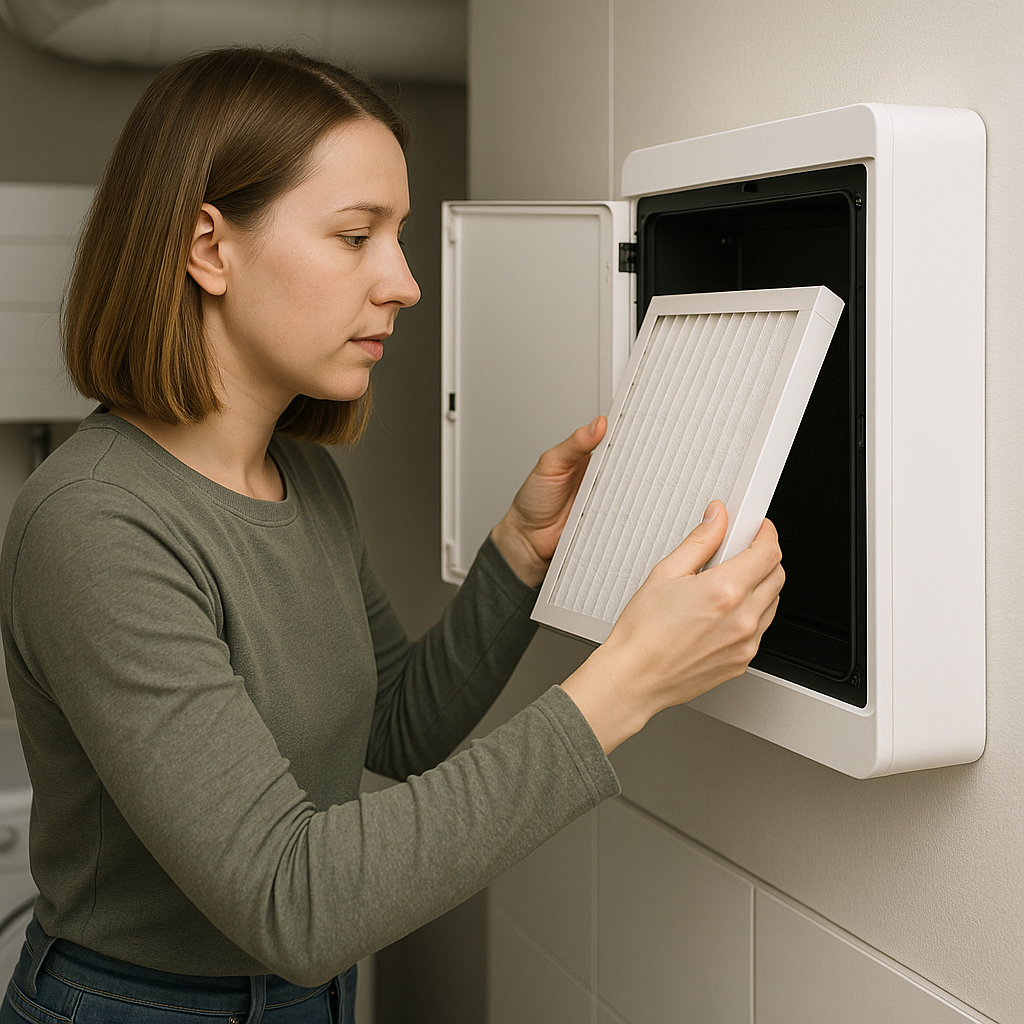
Filter replacement steps for PAUL recuperators:
- Safety first – turn off the device and disconnect it from the power source before starting work.
- Find the filter compartment - depending on the model, it may be on the front or under a special cover.
- Open the filter panel - carefully, without using excessive force.
- Remove the old filters - pay attention to their position and orientation.
- Check the filter chambers - clean them of dust or dirt if necessary.
- Insert new filters - make sure they are inserted correctly according to the airflow direction arrows.
- Close the panel and turn the device back on.
- Set a filter replacement reminder – many modern PAUL systems have this feature.
Filter maintenance best practices:
- Visually inspect the filters regularly, even if the recommended replacement time has not passed.
- monitor system efficiency indicators – reduced airflow may indicate clogged filters
- always have a set of spare filters so you can replace them immediately whenever necessary
- mark the change dates on your calendar or use mobile apps for reminders
How to recognize the signs of a worn filter:
- visible dirt or gray/brown color in previously white filters
- reduced air flow in the ventilation openings
- increased fan noise level
- unpleasant odor coming from the ventilation system
- increased dust levels in rooms
- more common allergy symptoms among the population
Consequences of delayed filter replacement
Failure to regularly replace PAUL heat exchanger filters can lead to various undesirable consequences. Clogged filters force fans to work harder, which increases electricity consumption by up to 15-30%. Dust and dirt that have penetrated worn filters can accumulate in the heat exchanger, reducing heat recovery efficiency.
Air quality also suffers significantly - inefficient filters allow more allergens, microorganisms and dust into living spaces. This is especially relevant for allergy sufferers or asthma sufferers. One HVAC specialist in Lithuania notes that approximately 60% of calls due to poorly functioning recuperation systems are related to filters that have not been replaced or have not been properly maintained.
In addition, clogged filters can become an ideal breeding ground for bacteria and mold. These microorganisms can multiply in the filters and then enter the indoor air. Prolonged operation of the system with clogged filters also shortens the life of the equipment and can lead to expensive repairs.
To avoid these problems and ensure optimal system performance, it is worth visiting the PAUL heat exchanger filter selection page , where you can find suitable filters based on your heat exchanger model or filter size.
Where to buy original PAUL recuperator filters: product selection and recommendations
When choosing where to purchase PAUL heat recovery filters, it is important to consider several essential factors to ensure proper product quality and compatibility with your system.
Original PAUL recuperator filters can be purchased from different sources:
- Official PAUL representatives – guarantee original products, but sometimes a higher price list applies
- Specialized HVAC stores – distribute certified filters with professional advice
- Online stores – convenient to order, often offer a wide range and competitive prices
- Building supply stores – some have HVAC filter sections
When choosing a supplier, pay attention to the following criteria:
- Are the filters offered original or certified as compatible with PAUL systems?
- Do the filters comply with the ISO 16890 standard?
- supplier reputation and customer reviews
- warranty and return policy
- technical support and advice on choosing the right filter
The most popular PAUL recuperator filter sets on the market:
- PAUL Focus (F) 200 filter set (275x187x20 mm) – suitable for one of the most popular PAUL recuperator systems in Lithuania
- PAUL Climos F200 filter set (174x168x44 mm) – designed for a specific model, ensures optimal performance
- PAUL Novus (F) 300/450 filter set – for larger systems used in larger rooms
- PAUL Iso-compact filter sets – specially designed for compact models
It is important to know that original PAUL filters often have special markings or logos. By purchasing non-original products, even if they are advertised as "compatible", you risk the efficiency of the system and the validity of the warranty. Third-party filters may not meet the exact size requirements, have inferior filter material or improper sealing, which reduces the efficiency of the system.
When purchasing PAUL recuperator filters online, make sure the website has clear contact information, secure payment options, and detailed product descriptions. Many reputable suppliers also offer filter selection tools based on the recuperator model, making it easier to find the right product.
Recommended product: Climos F200 filter set
The PAUL Climos F200 filter kit (174x168x44 mm) is one of the most popular choices for homeowners using the Climos series of recuperators. This kit is specially designed to ensure optimal performance of the PAUL Climos F200 recuperator.
Main features of the kit:
- precise size of 174x168x44 mm, ensuring a perfect fit for the Climos F200 model
- the set includes both supply and extract air filters
- filters comply with ISO 16890 standards, ensuring high air filtration quality
- easy installation without special tools
- optimal filtration material for longer service life
This filter kit is a great choice for Climos F200 users looking for a reliable solution for maintaining their ventilation system. /lt/ 121-paul-climos-f200-filtru-komplektas-174x168x44.html">PAUL Climos F200 filtrų komplektas ensures not only effective air filtration, but also helps maintain optimal system performance, while saving energy and extending the service life of the equipment.
Summary
Regular replacement of PAUL heat recovery filters is one of the most important aspects of ventilation system maintenance. Properly selected and timely replaced filters not only ensure healthy and clean air in the home, but also help maintain high efficiency of the heat recovery system, saving energy and money in the long term.
PAUL heat exchanger filters, which comply with the ISO 16890 standard, provide an optimal balance between effective particle retention and energy consumption. When selecting filters for your system, it is important to consider the specific heat exchanger model, the required filter sizes and classes to ensure proper system performance.
It is advisable to regularly check the filters of your recuperation system and replace them at the recommended intervals - on average every 3-6 months, depending on environmental conditions and intensity of use. This will not only ensure good air quality, but also extend the service life of the system itself.
When purchasing PAUL recuperator filters, it is recommended to choose reliable suppliers offering original or certified compatible products. Choosing the right filter and replacing it regularly is an investment in your home's air quality, energy efficiency and long-term reliability of your PAUL recuperator system.
Frequently Asked Questions (FAQ)
How often do PAUL heat recovery unit filters need to be changed?
Most PAUL filters are recommended to be replaced every 3-6 months, depending on usage intensity and air quality. Always refer to your model's instructions for specific recommendations.
Is it safe to use non-original filters for PAUL recuperators?
It is best to use original or officially compatible filters to ensure efficiency, proper fit and to preserve the warranty. Non-original filters may reduce the efficiency of the system.
What is ISO 16890 and why is it important?
ISO 16890 is a global standard for air filters that measures effectiveness against real-world airborne particles, ensuring that the filter performs as advertised.
How to find the right filter for your PAUL model?
Check the manual or label of your recuperator for the size/model. Many reputable sellers allow you to search by model or dimensions.
Can changing PAUL filters improve energy efficiency?
Yes, clean filters reduce system load, improve airflow, and reduce energy costs and heating bills.